




Holter ECG monitor with built-in AI

Wireless 3-channel Holter ECG monitor Octomed Octobeat

See the patient’s ECG while the monitor is still on. AI reviews first; the doctor reads and signs.

  • Class B medical deviceNo. 240000887/PCBB-HCM
  • ISO 13485:2016Held by the manufacturer
  • International publicationDigital Health, 2026
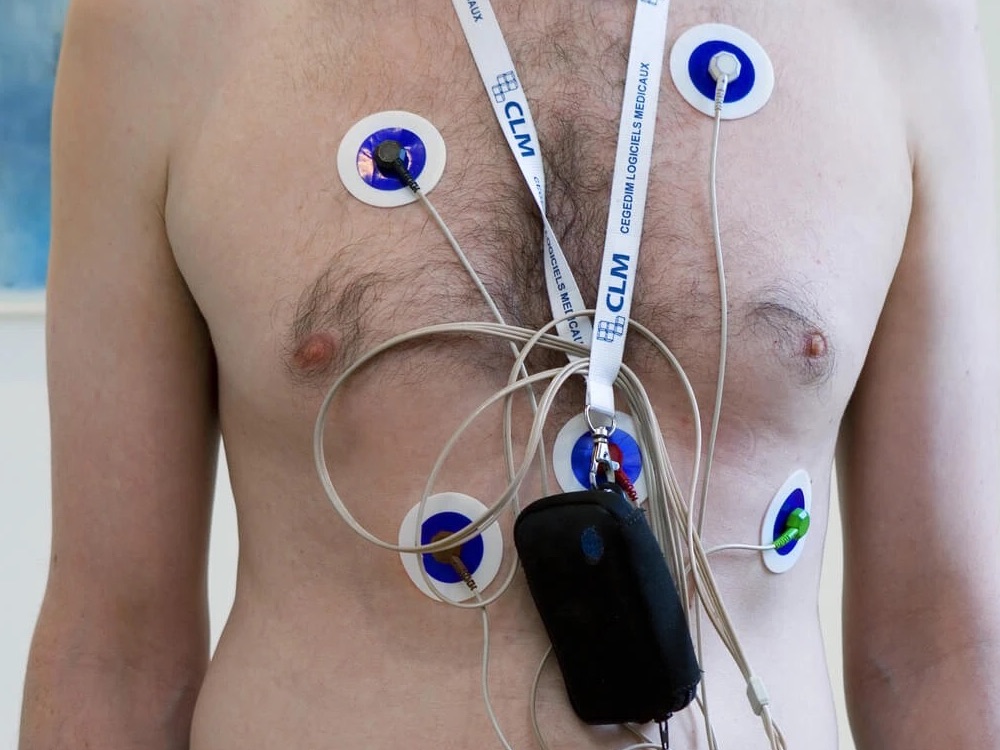
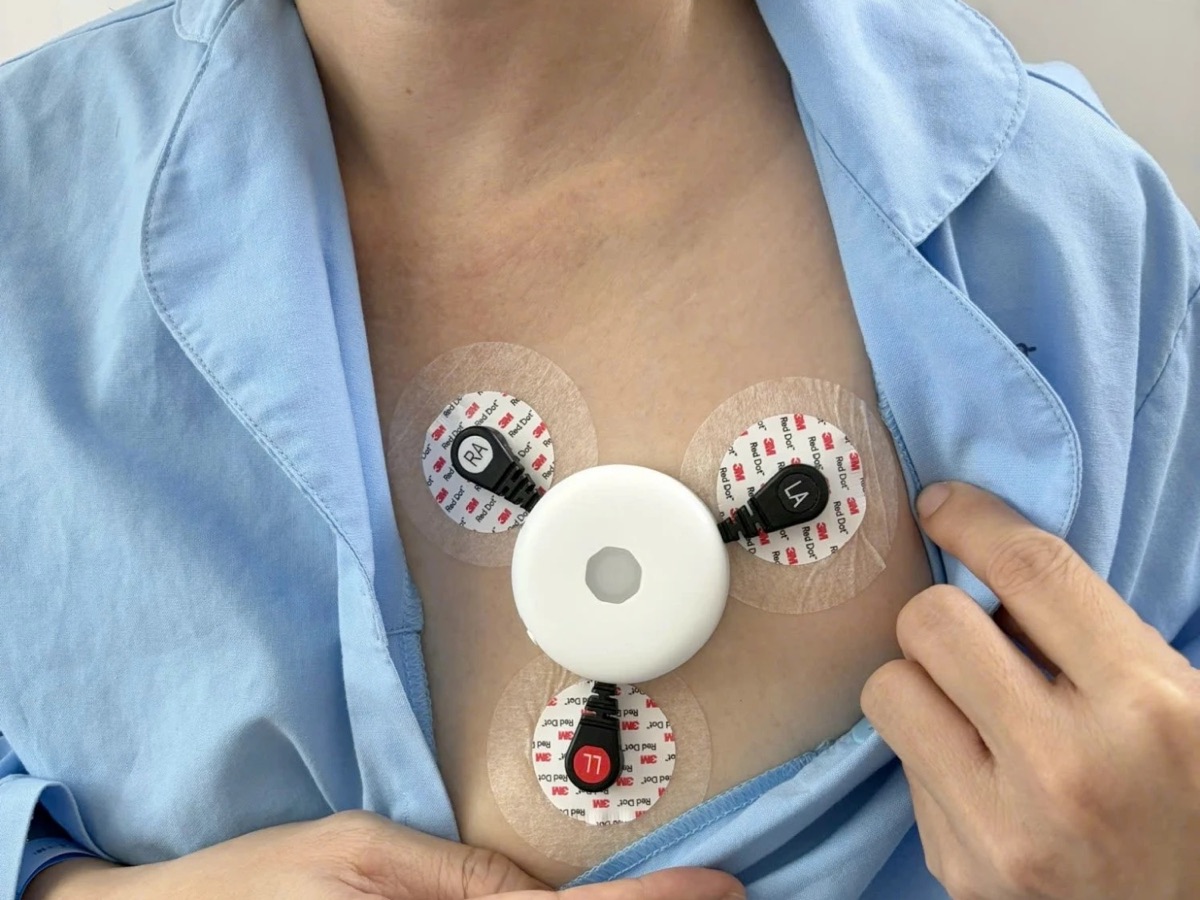
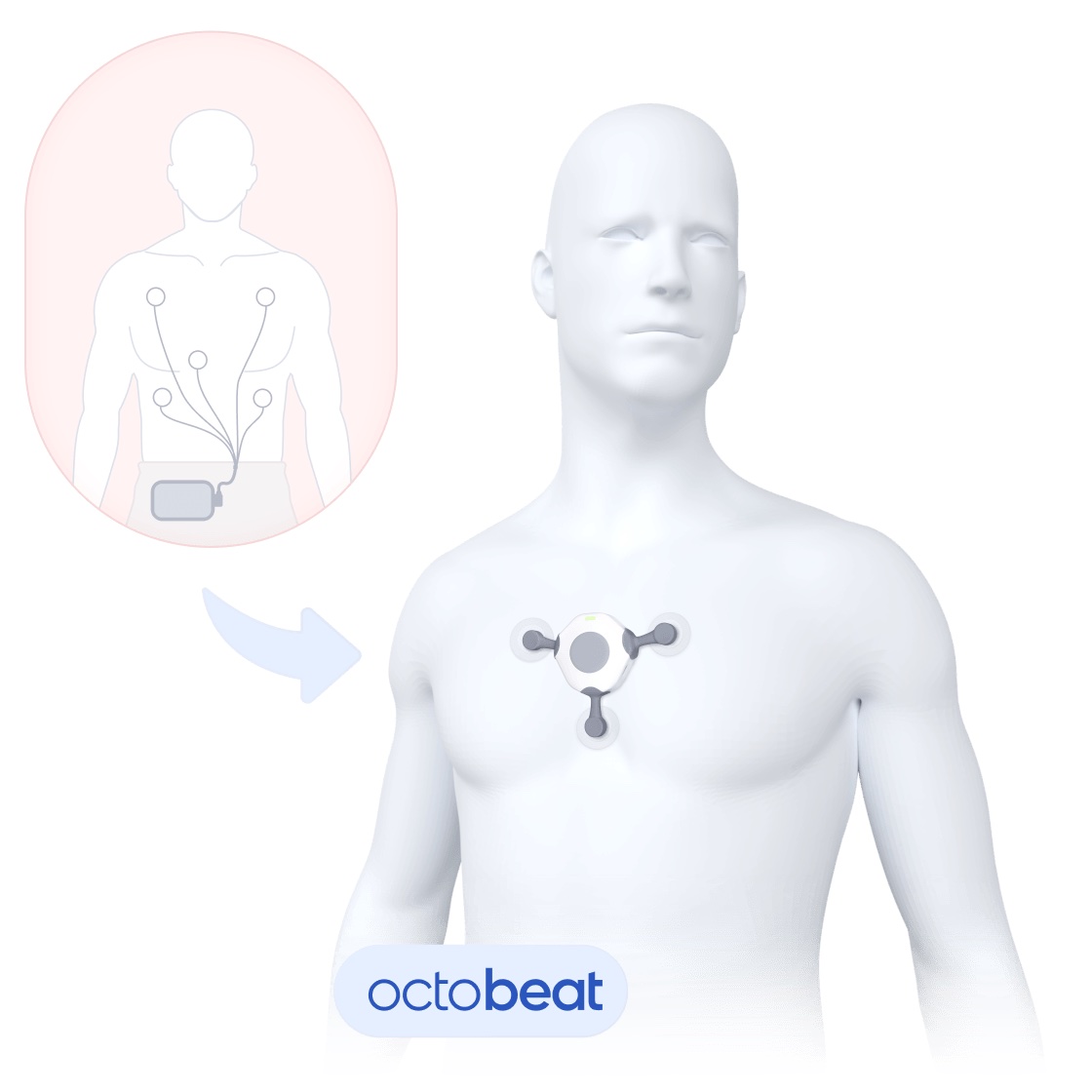
Illustration: the compact Octobeat in the centre of the chest; inset, a traditional wired Holter with several electrodes and a recorder on the hip
  • Wireless, 41 g
  • 3 channels, 16-bit
  • Stores up to 30 days of ECG
  • AI classifies every beat
  • View the ECG during wear
  • Read and sign on the web
  • Reports in Vietnamese and English
  • Made in Vietnam

In use at

  • Raffles Medical
  • Bewell International Clinic
  • MedArmor
  • SIG – Saigon International General Hospital
  • Bản Việt Clinic

Published in an international journal

The system was developed through research on 1,000 cases by the University of Medicine and Pharmacy at Ho Chi Minh City with Nguyễn Trãi Hospital.

International journal · SAGE · 2026

Digital Health

Development of a semi-real-time electrocardiogram monitoring system integrating artificial intelligence and wearable devices for atrial fibrillation screening

Nguyen, S. V., Ho, M. K., Nguyen, D. V., Nguyen, C. Q., Pham, A. L., & Quach, H. T. (2026). Digital Health, 12. doi:10.1177/20552076261458176 · PMID 42272708
View the paper on PubMed

OctoRhythm software: AI reads alongside the doctor

Web-based ECG analysis software with AI, built for doctors. It opens in a browser, needs no installation and has no limit on computers or doctors.

OctoRhythm: heart-rate overview, per-beat classification and shaded atrial fibrillation episodes. Image: Octomed.
  • AI classifies every beat

    Machine learning recognises the rhythm and abnormal events, then summarises them for the doctor.

  • Abnormal passages first

    Abnormal ECG passages are prioritised for review, so the doctor does not have to scan the whole recording.

  • ECG during wear

    The ECG strip updates every hour, and can be viewed live while the monitor is online. Poor signal or wrong placement is noticed early.

  • Noise filtering, clear signal

    Signal filters reduce noise on screen, so the doctor can read the waveform more easily.

  • A full set of reading tools

    Calipers, bulk removal of automatic misreads, QTc, ST segment, HRV and ectopic beat morphology.

  • Conclude and sign in the system

    The doctor writes the conclusion, signs electronically and exports a PDF report in Vietnamese and English, carrying your organisation’s logo.

Reading time: about 10 minutes per report, because the AI reviews and prioritises first.

One Holter case at your clinic

  1. Create the study

    Enter the patient and the order on the web, in 5 steps.

  2. Attach the monitor

    Three electrodes; a green light confirms good contact.

  3. Follow remotely

    Check the ECG and signal quality while the patient is at home.

  4. The patient marks symptoms

    They press the button and choose the symptom in the Octo360 app.

  5. AI analysis

    Beats are classified and abnormal passages prioritised.

  6. The doctor reads and signs

    The PDF report goes to the patient and is stored in the system.

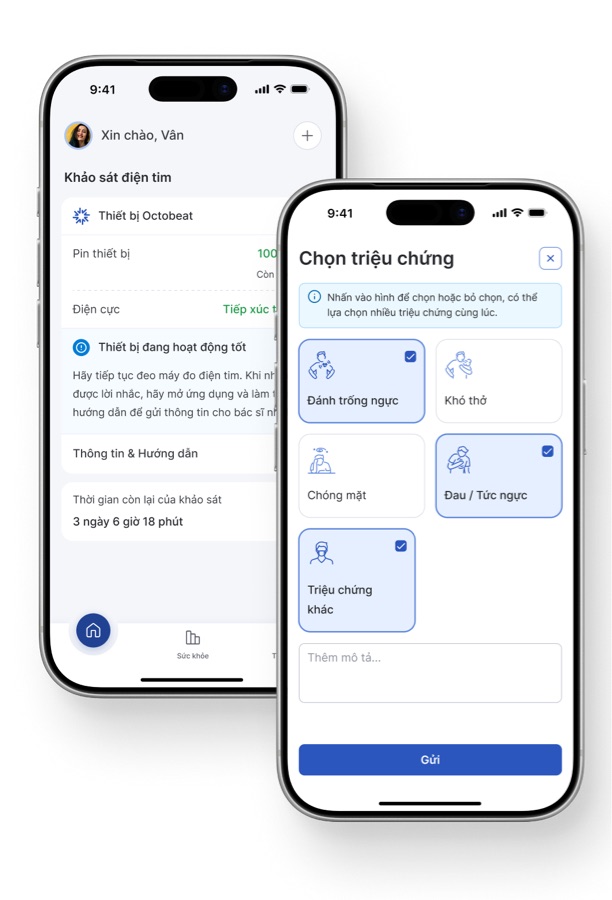
Two Octo360 screens (Vietnamese interface): device status and time left in the study; the list of symptoms to choose from

The Octo360 app for patients

Patients choose a symptom when they press the MARK button, follow the study and device status, and open visual instructions.

Image: Octomed.

BioSenses also offers home fitting and a cardiologist reading service for clinics.

Wireless versus a traditional wired Holter

The Octobeat on the centre of the chest, held by three electrodes, with no cables
BioSensesOctomed Octobeat with BioSenses
A traditional Holter: five chest electrodes cabled to a recorder hanging in front of the abdomen
TraditionalTraditional wired Holter
CriterionOctomed Octobeat with BioSensesTraditional wired Holter
How it is wornDirectly on the chest, three electrodesFive electrode cables to a recorder on the hip
Weight41 gAbout 100 g, without batteries
PowerRechargeable batteryAA batteries replaced for each case
DataECG visible while the patient still wears the monitorAvailable only after the monitor is returned
ReadingAI prioritises abnormal passages; about 10 minutesManual review by the doctor
SoftwareWeb-based, no limit on computers or doctorsInstalled on each computer
Recording timeStores up to 30 daysUsually 24 hours
ReportVietnamese and English, with QTc and STUsually English only

Get the full comparison

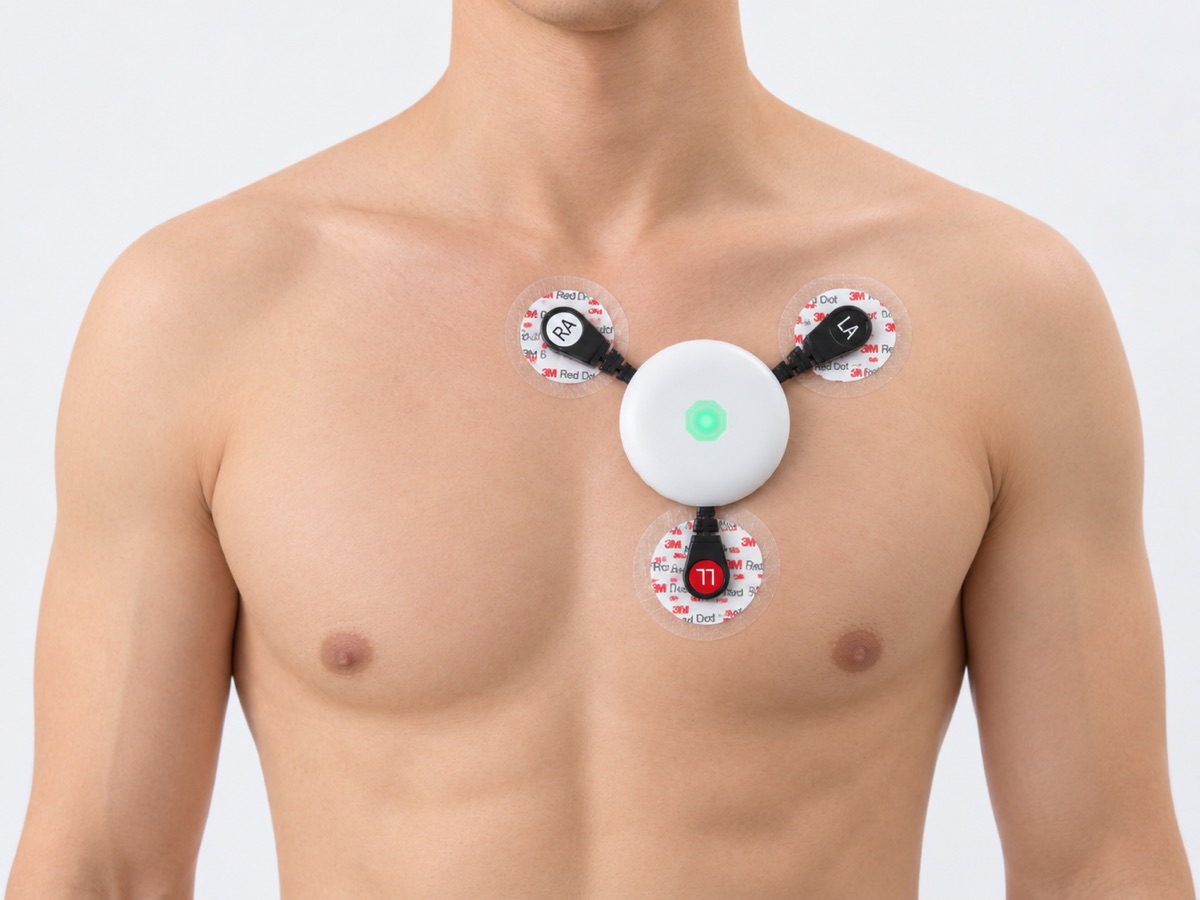
Photo taken at a clinic: the Octobeat on a patient’s chest, held by three electrode patches

Photo taken at a clinic.

Wireless, just 41 g, wearable for days

The body is Ø 59 mm and 15 mm thick, and snaps straight onto three standard ECG electrodes. It stores up to 30 days of data and has a motion sensor and a symptom-marker button. Patients wear it under their clothes and carry on as usual.

Meets the technical requirements commonly found in tender documents

Request tender documents
  • Manufacturer certified to ISO 13485:2016
  • Class B medical device with full registration documents
  • 41 g including battery (usual requirement ≤155 g)
  • Records from 24 hours, stores up to 30 days
  • 3 channels, 16-bit resolution
  • Heart rate 25–250 bpm, ±2 bpm
  • Event-marker button on the device
  • Motion sensor
  • Lead-off indicator light
  • 5–45 °C, 10–95 % humidity
  • Multi-workstation software with synchronised data
  • AI flags abnormal passages automatically
  • Longest RR, atrial fibrillation, ventricular and atrial ectopic beats
  • QTc, ST segment, HRV
  • Summary report in Vietnamese
  • User manual in Vietnamese and English
  • 12-month warranty
  • HIS/EMR integration on request

Leave your details and BioSenses will send the technical file and certificates your organisation requires. The Octobeat records 3 channels and does not replace a 12-lead Holter.

Declared in Vietnam

  • Class B medical device, declaration no. 240000887/PCBB-HCM (Ho Chi Minh City Department of Health, 26 April 2024)
  • Manufacturer certified to ISO 13485:2016, valid until 19 May 2028
  • Designed and made in Vietnam, with the engineering team in Ho Chi Minh City

Bilingual reports carrying your logo

Overview page, daily summary, marked ECG strips, ectopic beats, HRV, ST and QTc. Your own doctors conclude and sign in the system.

First page of a real Bio Rhythm report (Vietnamese version), with personal details and the signature covered. Click to enlarge.

In the box

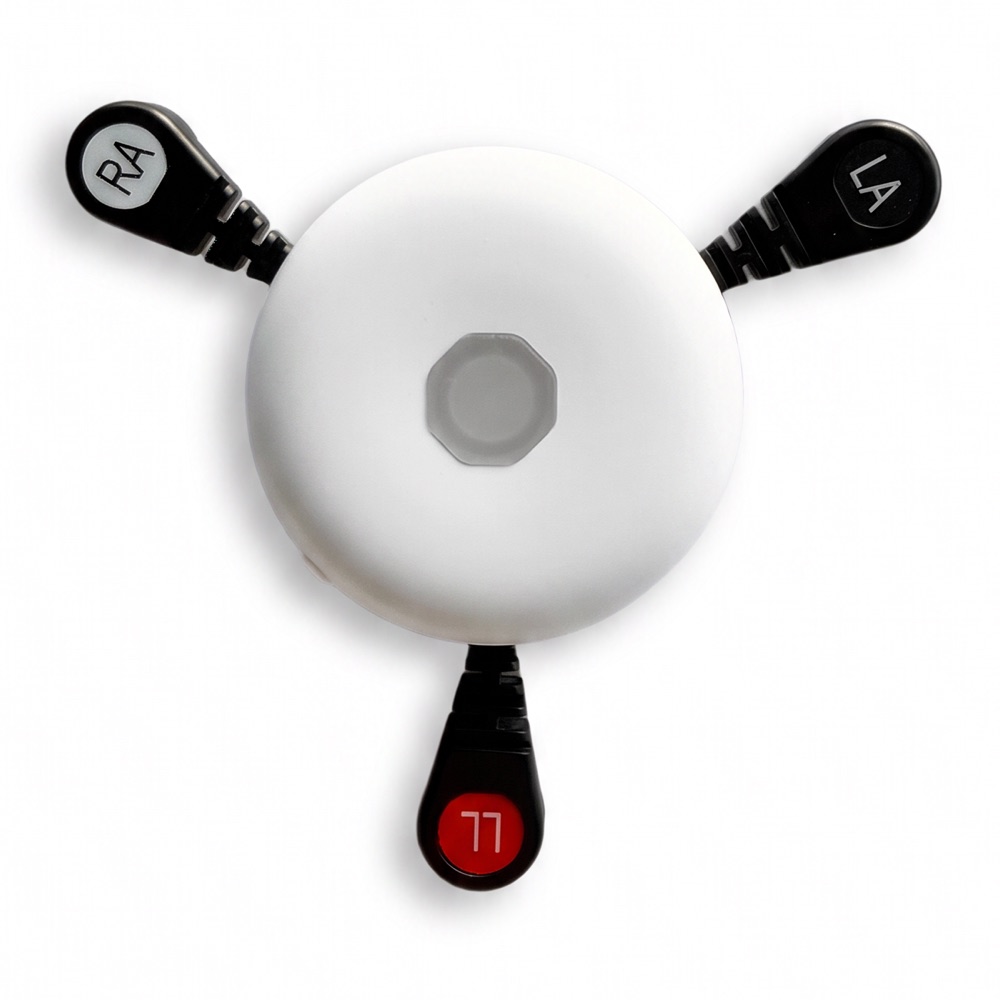
The Octobeat from above: a round white body with the marker button in the centre and three electrode connectors
Top
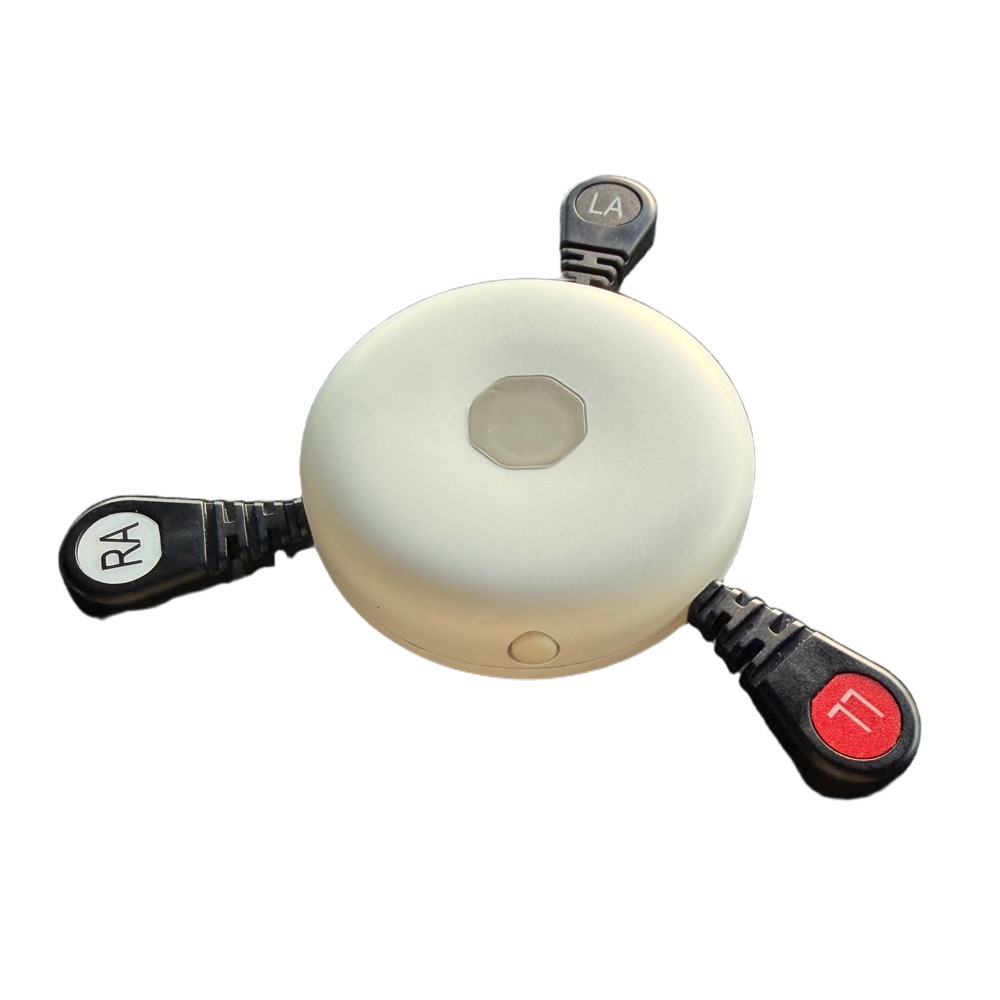
The Octobeat at an angle, showing its thickness and the RA, LA and LL connectors
Angled view
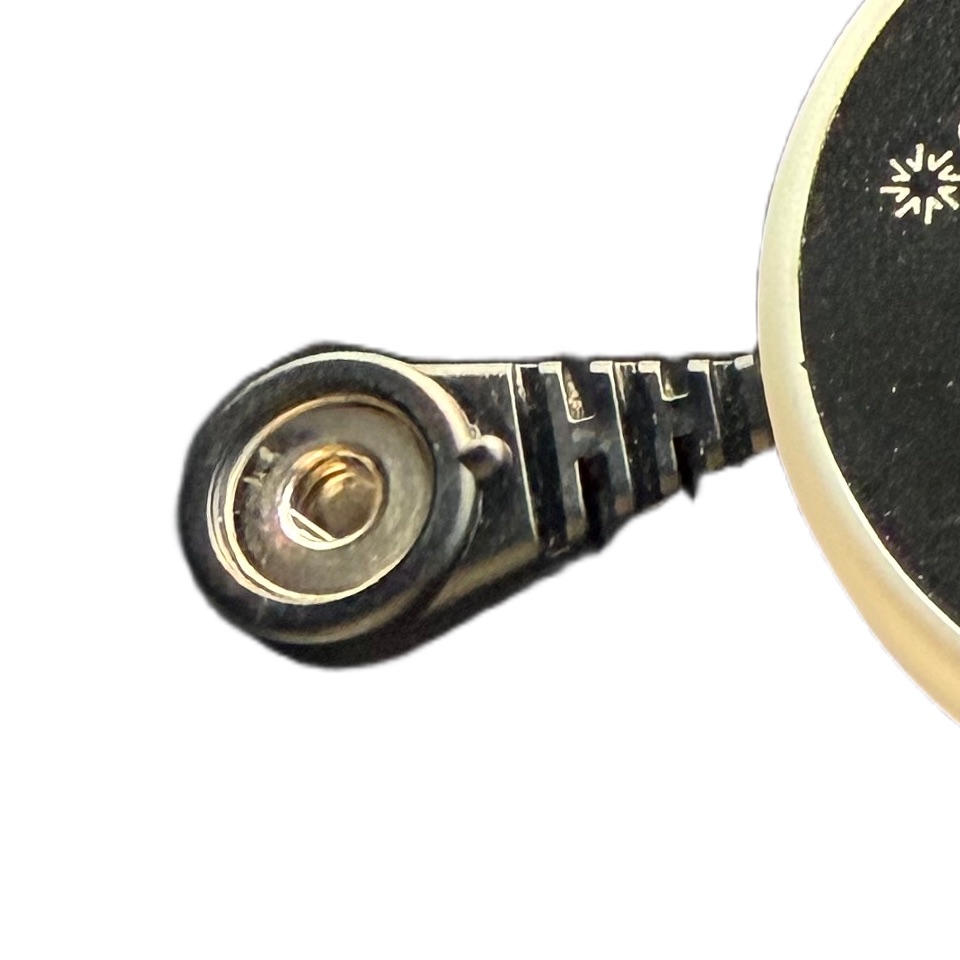
Close-up of an Octobeat snap connector on the underside, where it attaches to a standard ECG electrode
Electrode connector
  • Octobeat ECG recorder
  • Charger and USB cable
  • User guides in Vietnamese and English
  • Storage tray
  • OctoRhythm software and the BioSenses platform

Each recording uses three standard ECG electrodes, which are not included.

Specifications

Model
Octobeat
Weight
Commonly required in tender documents41 g including battery
Body
Ø 59 mm, 15 mm thick
Size including connectors
116,5 × 85,5 mm

Commonly required in tender documents.

Documents

Frequently asked questions

Can the Octobeat replace a 12-lead Holter?

No. It records 3 channels and is used for extended rhythm monitoring and arrhythmia screening.

Does the AI replace the doctor’s reading?

No. The AI classifies beats and prioritises abnormal passages; the doctor reviews, concludes and signs the report.

What needs to be installed? How many users are allowed?

OctoRhythm runs in a browser with nothing to install, and has no limit on computers, doctors or sites.

What can the doctor see while the patient is still wearing the monitor?

An ECG strip that updates every hour, the live ECG while the monitor is online, and the events the patient has marked.

What does the report contain? Can it carry the clinic’s logo?

Heart rate, atrial fibrillation, ectopic beats, pauses, AV block, HRV, ST, QTc and ECG strips. Reports come in Vietnamese and English and carry your organisation’s logo.

How long does one case take to read?

About 10 minutes per report, because the AI reviews and prioritises first.

What is the maximum recording time? How long does a charge last?

The monitor stores up to 30 days of data. One charge lasts about 48 hours; never charge it while it is on the patient.

Which electrodes does it use? What consumables does each case need?

Standard ECG electrodes available on the market, three per recording.

Can patients shower while wearing it?

The monitor must be removed before showering and reattached with new electrodes.

Can it be used on patients with a pacemaker?

The device has not been evaluated for patients with a pacemaker.

Where is the data stored, and does it connect to an EMR/HIS?

Data is stored centrally on a server. HL7/DICOM integration is built on request.

What if our clinic has no doctor who reads Holter recordings?

BioSenses offers a service in which a cardiologist reads and signs the report, and home fitting for your clinic’s patients.

What about warranty and training?

The warranty is 12 months from delivery. BioSenses provides on-site training.

How does BioSenses support tender submissions?

BioSenses sends the specifications, certificates and declaration file the tender documents ask for. Tick “Tender documents” in the form below.

Request a quote and technical file

Leave your details and BioSenses will contact you with a quote and the documents your organisation needs.

Hotline 0967 917 619

See the Bio Rhythm solution for clinics and hospitals

What you need