What is Holter ECG monitoring? When it is needed, how it works and what to keep in mind
Written by BioSensesUpdated · 12 min read
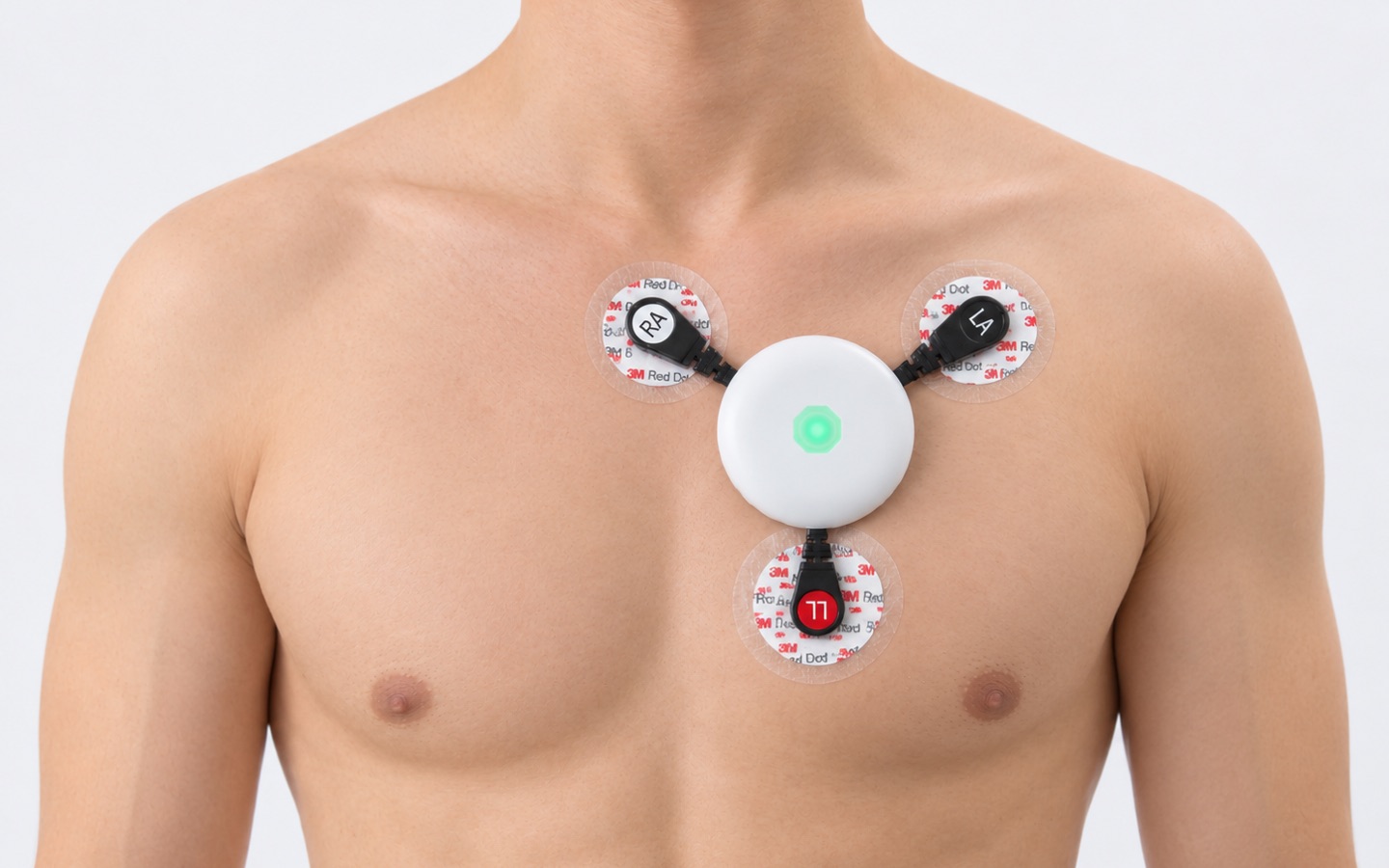
Has your doctor ordered Holter ECG monitoring, or do you often feel palpitations or dizziness although your ECG at the clinic is normal? This article explains what Holter monitoring is, when it is needed, how it works step by step, what to do and avoid while wearing the monitor, how to understand the result, and what it costs.
In brief
- A Holter monitor is a small device worn on the chest that records your heart rhythm continuously for 24 hours or longer.
- It is painless and non-invasive; you work and sleep as usual.
- A cardiologist reads the recording; the monitor does not draw conclusions on its own.
1. What is Holter ECG monitoring?
A Holter monitor (also called a Holter ECG or ambulatory ECG) is a small battery-powered ECG recorder worn on the chest for 24 hours or longer. Patches (electrodes) on the skin pick up the heart’s electrical signal, and the monitor stores every beat while you work, move and sleep.
Once the monitor is removed, software analyses the data and a cardiologist reads it. The method is named after Norman Holter, the scientist who developed it.
2. How does it differ from a standard ECG?
An ECG at the clinic records a few minutes while you lie still. Many rhythm disturbances appear only in episodes, during exertion, stress or sleep, so a standard ECG can be entirely normal even though you still have symptoms.
| Standard ECG | Holter ECG | |
|---|---|---|
| Recording time | A few minutes | 24 hours to several days |
| Setting | Lying still at the clinic | Everyday life, including sleep |
| Brief episodes | Easily missed | Recorded if they occur during wear |
| Matching symptoms | No | Yes, with the marker button |
3. Types of Holter monitoring: 24, 48, 72 hours and longer
Your doctor decides how long you wear the monitor, depending on how often your symptoms occur.
| Duration | Usually chosen when |
|---|---|
| 24 hours | Symptoms occur almost every day |
| 48–72 hours | Symptoms occur once every few days |
| 7 days or more | Symptoms are rare, or silent atrial fibrillation is being looked for |
A traditional Holter uses several electrode cables connected to a recorder on the hip and usually records 24 hours only. Newer monitors are wireless, smaller and lighter, attach directly to the chest and can be worn for several days.
4. When do doctors order Holter monitoring?
- A racing heart, palpitations, pounding or skipped beats
- Unexplained dizziness, light-headedness or fainting
- Breathlessness, fatigue or atypical chest pain
- A normal standard ECG when an arrhythmia is still suspected
- Suspected atrial fibrillation, especially after a stroke of unknown cause
- Assessing antiarrhythmic medication or the outcome of arrhythmia treatment
- Follow-up in people with existing heart disease, at the doctor’s request
5. Who should take care before wearing one?
Holter monitoring is non-invasive and suits almost everyone. Tell the doctor or technician beforehand if you:
- Have a pacemaker, a defibrillator or a nerve stimulator
- Have sensitive skin or have reacted to medical adhesive
- Are due to have an MRI scan while wearing the monitor
- Have severe symptoms such as crushing chest pain, serious breathlessness or fainting: go to emergency care rather than wait for a Holter
6. How to prepare
- Shower before the appointment, because the monitor must stay dry during wear
- Do not put cream, oil or powder on your chest
- Wear a loose shirt that buttons at the front, to make fitting easier
- Men may need to shave the chest where the electrodes go
- Have a list of your medication and usual symptoms ready
- No fasting is needed; eat, drink and take your medication as usual unless your doctor says otherwise
7. Holter monitoring step by step
Fitting
The technician cleans the skin, places the electrodes on your chest, attaches the monitor and checks the signal. With the BioSenses home service, the technician comes to your home at the agreed time. Fitting takes about 10–15 minutes.
Wear it and live normally
Work, eat and sleep as you always do, so the monitor records your heart rhythm in everyday life.
Mark your symptoms
When you feel palpitations, dizziness, chest pain or breathlessness, press the button on the monitor and note the time and what you were doing. The doctor compares this with the ECG at that moment.
Removal and analysis
At the end of the recording the monitor is removed and the data is uploaded to the analysis software.
The doctor reads and reports
A cardiologist reviews the recording, concludes and signs the report. At BioSenses the result is sent by App and Zalo within 24 hours of collection.
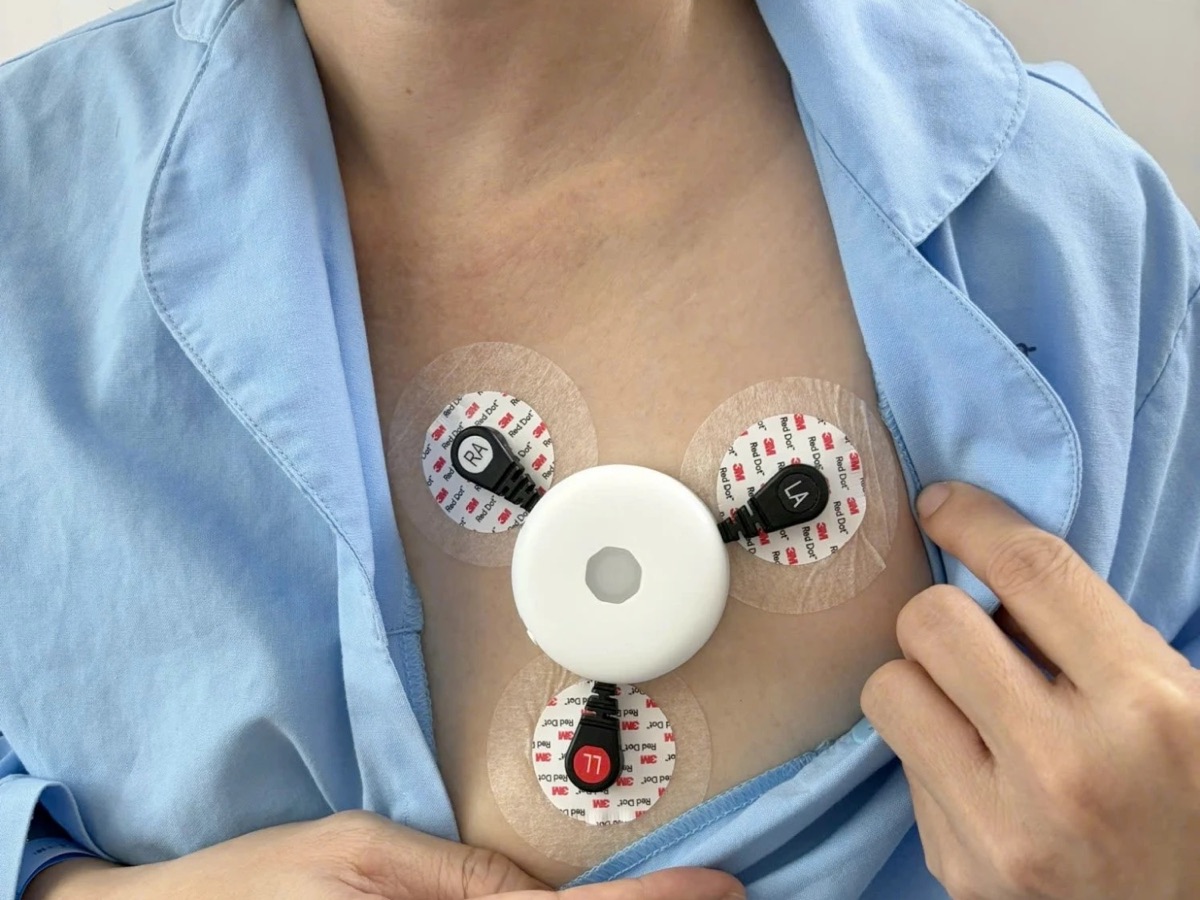
8. Do’s and don’ts while wearing the monitor
| Do | Don’t |
|---|---|
| Live, work and sleep as usual | Get the monitor wet, swim or use a sauna |
| Press the button and note the time when you have symptoms | Remove the monitor without having been shown how |
| Check that the patches are still firmly attached | Use an electric blanket or heating pad, or stand right next to an induction hob |
| Call the technician if a patch comes loose or itches badly | Exercise hard and sweat heavily, which loosens the patches |
| Use your phone as usual | Charge the monitor while it is on your body |
With the Octobeat monitor that BioSenses uses, take it off before showering and use new electrodes when you put it back on; the technician shows you how.
9. What does a Holter result show?
- Heart rate
- Average, fastest and slowest, by day and by night. A rate that stays too fast or too slow is something the doctor looks at.
- Atrial fibrillation
- Whether episodes occurred, how many, and how long the longest lasted. Atrial fibrillation raises the risk of stroke, so it needs to be found.
- Ectopic beats
- Early beats arising from the atria or ventricles, given as a count and a percentage.
- Ventricular and supraventricular tachycardia
- Runs of abnormally fast beats and their highest rate.
- Pauses
- Moments when the heart pauses for longer than 2.5 seconds.
- Atrioventricular (AV) block
- The electrical signal is delayed or blocked between the atria and the ventricles.
- Heart rate variability (HRV), ST segment, QT/QTc
- Additional measurements for the doctor’s assessment.
- The symptoms you marked
- Compared with the ECG at exactly that time.
A normal result does not fully rule out an arrhythmia if no episode occurred during the recording; the doctor may suggest a longer one. With an abnormal result, see your treating doctor, who will explain it and decide the next step.
10. What is different about a Holter with AI?
One day of recording produces a great deal of ECG data. Traditionally the doctor reviews it passage by passage by hand. With an AI Holter, the software classifies every beat and brings abnormal passages to the top, so the cardiologist can concentrate on the passages that matter. The doctor still writes the conclusion and signs the result.
In the press: Holter ECG with AI (articles in Vietnamese)
11. At the hospital or at home?
At a hospital you usually go three times: once for fitting, once to return the monitor and once to collect the result. With a home service, a technician fits and collects the monitor at an agreed time and the result arrives on your phone. Either way the doctor gets the same kind of information; the difference is travel and waiting.
12. What Holter ECG monitoring costs
The cost varies with the provider, the monitor and the duration. At BioSenses (Ho Chi Minh City), Holter ECG monitoring at home costs 1,200,000 VND for 1 day (24 hours), 1,850,000 VND for 3 days (72 hours) and 3,400,000 VND for 7 days, including the monitor, fitting and collection at home, the report and the cardiologist’s reading. The service is not covered by Vietnamese social health insurance (BHYT).
13. Frequently asked questions
Does wearing a Holter monitor hurt?
No. The monitor only records electrical signals through patches on the skin. There are no needles and no current is sent into the body.
Is it risky? Are there side effects?
It is a safe technique. The most common side effect is mild itching or redness under the patches.
Can I shower while wearing it?
The monitor must stay dry. With the Octobeat, take it off before showering and use new electrodes when you put it back on.
Can I sleep with it on? Can I lie on my side?
Yes. You wear it while sleeping and lie as you normally do; a wireless monitor gets in the way less.
Can I work and drive?
Yes. The doctor needs to see your heart rhythm during your ordinary day.
Can I exercise?
Walking and light activity are fine. Avoid exercise that makes you sweat heavily and loosens the patches.
Can I use my phone or computer?
Yes. Use your phone as usual.
Can I go through airport security?
Metal detectors and high-voltage areas are best avoided during wear; ask the technician if you are about to travel.
Do I need to fast or stop my medication?
No. Eat, drink and take your medication as usual unless your doctor says otherwise.
Should I wear it for 24, 48 or 72 hours?
Follow your doctor’s order; it depends on how often your symptoms occur.
What if a patch comes loose?
Call the technician. With the Octobeat, replace the patch with a new one and reattach the monitor as instructed.
Can Holter monitoring pick up atrial fibrillation?
Yes, if an episode occurs while you are wearing the monitor. Infrequent episodes may need several days of recording.
Can it show a heart attack or narrowed coronary arteries?
Holter monitoring follows the heart rhythm; it is not the test used to confirm a heart attack. For severe chest pain, call 115.
Does a normal Holter result mean my heart is healthy?
It means no rhythm disturbance was recorded during wear. If your symptoms continue, talk to your doctor again.
How soon is the result ready?
At BioSenses, within 24 hours of collection, by App and Zalo.
How does a Holter ECG differ from 24-hour blood pressure monitoring?
A Holter ECG records the heart rhythm continuously; ambulatory blood pressure monitoring measures blood pressure many times over 24 hours. A doctor may order one or both.
Can children and pregnant women wear one?
Ask the treating doctor; the decision depends on the individual case.
Do I need a referral? Is it covered by BHYT?
The BioSenses home service does not require a referral and is not covered by Vietnamese social health insurance (BHYT).
For information only. It does not replace a doctor’s advice.
Sources: Octobeat ECG recorder user manual (Octomed) · Nguyen S. V. et al. (2026), Digital Health, 12